![If any man serve me, let him follow me [John 12:26]](https://onevisit.org/wp-content/uploads/2025/04/cropped-onevisit_final.jpg)
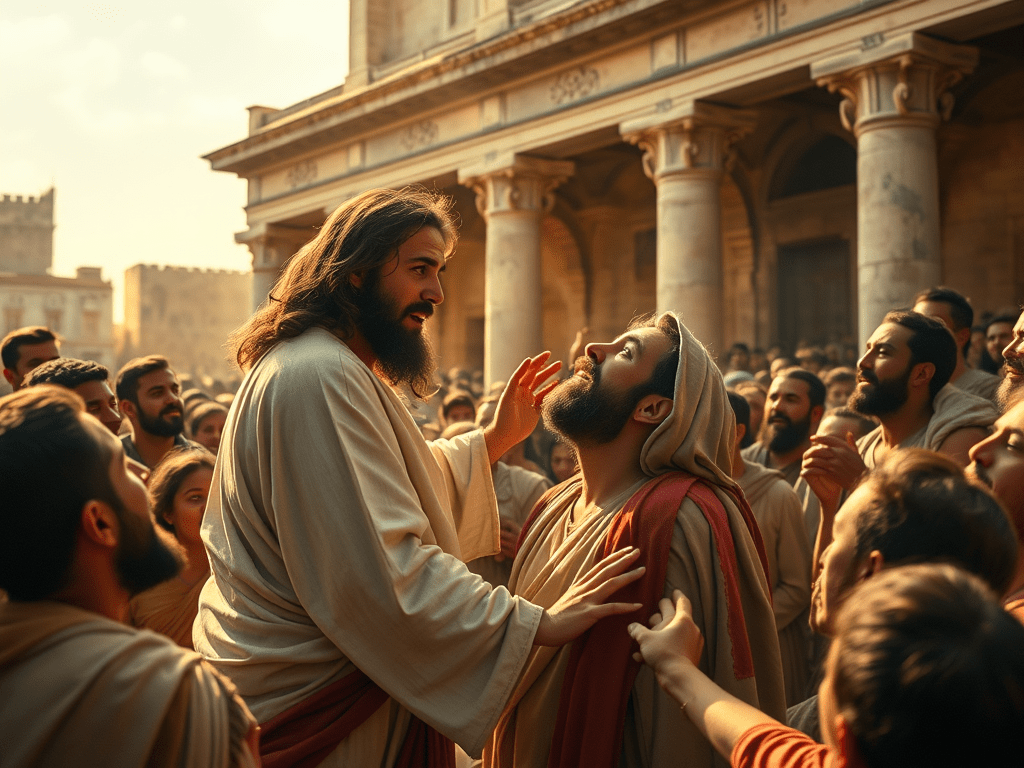
Yeshua healed on the Sabbath not to violate God’s law but to reveal His divine authority as Lord of the Sabbath (Matthew 12:8), to fulfill prophecy, expose religious hypocrisy, and demonstrate that He was sent from God. His actions were deliberate acts of compassion that reflected the true spirit of the Sabbath—a day meant for restoration and mercy, not rigid ritualism.
Yeshua never intended to abolish God’s Law. In Matthew 5:17–18, He declared that He came not to destroy the Law or the Prophets but to fulfill them. What He challenged were not God’s commands but the Pharisaic traditions that distorted them. Their man-made regulations had turned the Sabbath into a burden rather than a blessing. Yeshua magnified and honored the Law, fulfilling Isaiah 42:21, which foretold that the Messiah would “magnify the law and make it honorable.”
The Sabbath’s origin traces back to creation (Genesis 2:1–3), when God rested after completing His work, establishing a divine rhythm of rest and worship. In Mosaic law (Exodus 31:13–18; Leviticus 23:3), Israel was commanded to keep the Sabbath holy as a reminder of God’s creative and redemptive purposes. The day was meant for reflection on God’s covenant and the coming kingdom He planned from creation (Matthew 25:34).
However, sin disrupted this divine plan. Instead of God dwelling among His people in perfect rest, humanity fell, and dominion over the earth was corrupted. God then chose Israel to be His instrument for restoration (Genesis 12; Exodus 19:3–6). Through Sabbath observance, Israel was to remember her calling—to restore God’s authority on earth and look forward to His eternal kingdom.
Yet, over time, Israel lost sight of the Sabbath’s meaning. Influenced by legalism and idolatry, they began to worship the Sabbath itself rather than the God who ordained it. By Yeshua’s time, the Pharisees had multiplied restrictive laws, missing the heart of God’s command. Yeshua’s Sabbath healings directly confronted this distortion, showing that doing good and bringing life perfectly aligned with God’s intent for the day.
His miracles on the Sabbath—restoring the crippled, giving sight to the blind, and freeing the oppressed—demonstrated divine restoration. They were not acts of rebellion but of revelation, proving that the true rest and healing of the Sabbath are found in Him. As Lord of the Sabbath, Yeshua embodied the ultimate rest promised since creation.
When Israel rejected Him, the fulfillment of God’s earthly kingdom was postponed until His return. The nation had forgotten that the Sabbath pointed to God’s presence and purpose, not mere ritual observance.
Yeshua’s actions remind believers that the Sabbath is a sign of God’s grace, creation, and redemption. It calls His followers to rest in Him—the One who heals, restores, and fulfills the true meaning of God’s Law. Through Yeshua, the Sabbath finds its ultimate expression: divine rest and restoration for all creation.
 If any man serve me, let him follow me [John 12:26]