![If any man serve me, let him follow me [John 12:26]](https://onevisit.org/wp-content/uploads/2025/04/cropped-onevisit_final.jpg)
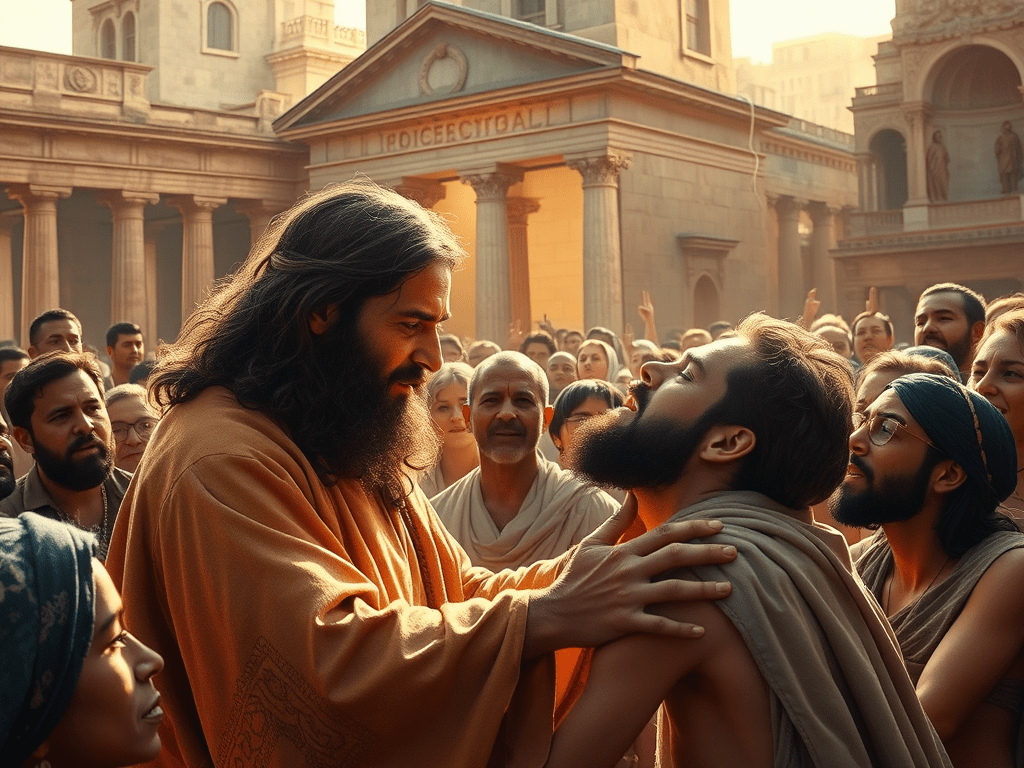
During Israel’s long history, the people endured domination by many empires — first the Egyptians, then the Assyrians, Babylonians, and finally the Romans during the first century. This era of Roman oppression had been foretold by the prophet Daniel (Daniel 2; 7), who spoke of successive kingdoms that would rule over Israel. Under Roman control, the Israelites suffered greatly and longed for deliverance. According to Daniel 2:40–45, they awaited the coming of their promised Messiah, the divinely anointed one who would establish God’s everlasting kingdom and set them free from foreign rule.
Because of this anticipation, any claim or sign of a potential Messiah drew intense attention from the Jewish religious authorities. In that period, rabbis categorized miracles into two groups: those that any prophet or righteous person could perform through God’s power, and those that only the Messiah Himself was expected to accomplish. The Hebrew Scriptures — particularly Isaiah 26:19; 29:18–19; 32:3–4; 35:5–6 — described specific “Messianic miracles,” such as giving sight to the blind, enabling the lame to walk, opening the ears of the deaf, restoring speech to the mute, cleansing lepers, raising the dead, and preaching good news to the poor (Luke 7:22).
When Yeshua began performing these very signs, the Pharisees and other religious leaders felt compelled to investigate Him. It was their official duty to examine anyone who appeared to fulfill Messianic prophecies. This explains why delegations of Pharisees repeatedly questioned Yeshua, testing His authority and actions. The same process had been followed earlier when they investigated John the Baptist (John 1:19–28).
While some religious figures—such as Nicodemus and Joseph of Arimathea—believed in Yeshua’s divine calling, fear of the Sanhedrin’s political and social repercussions kept them silent. Many of their peers, driven by jealousy and a desire to protect their religious influence, refused to accept Him. Though Yeshua’s works clearly fulfilled the Messianic expectations foretold in Scripture, the religious authorities rejected Him, ultimately orchestrating His death to preserve their own power and prevent the people from following Him.
Thus, the tension between Yeshua and the Pharisees was not merely theological—it was deeply rooted in Israel’s longing for freedom, their misunderstanding of the Messiah’s true mission, and the unwillingness of many leaders to surrender their control in the face of divine truth.

