![If any man serve me, let him follow me [John 12:26]](https://onevisit.org/wp-content/uploads/2025/04/cropped-onevisit_final.jpg)
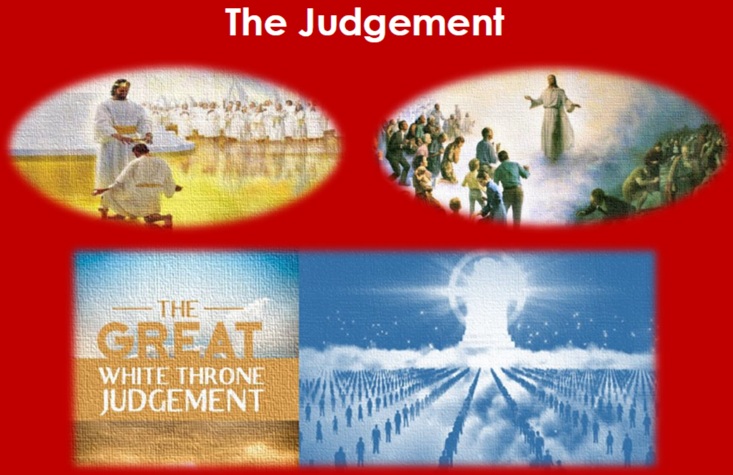
Every human being will one day experience the power of God in resurrection. Just as surely as death is unavoidable, resurrection and judgment are also certain. Scripture clearly teaches that after death comes judgment (Hebrews 9:27), and that God has appointed a specific day when He will judge the secrets of every person (Romans 2:16). No one can escape this divine appointment. Every individual—regardless of age, background, nation, or belief—will stand before God and give an account.
However, many assume that God’s judgment is a single event applied equally to all people. The Bible reveals otherwise. Scripture distinguishes between several different judgments, each with its own purpose, timing, and participants. Understanding these distinctions helps clarify God’s plan for humanity and His dealings with believers, nations, and unbelievers.
First, the Judgment Seat of Messiah (also called the Bema Seat) is for believers. This judgment is not to determine salvation but to evaluate the works of the redeemed and to dispense rewards for faithful service.
Second, there is the Judgment of the Nations, which occurs at the Next Coming of Messiah. This judgment separates the “sheep” from the “goats” based on how people treated Messiah’s brethren during the Tribulation, determining who will enter the Millennial Kingdom.
Finally, the Great White Throne Judgment is the final judgment for the unsaved dead of all ages. Here, those who rejected God’s salvation will be judged according to their works and cast into the lake of fire.
These three judgments reveal the perfect justice and order of God’s eternal plan.
- The Judgment Seat (Bema) of Messiah
The Judgment Seat of Messiah, or Bema, comes from the Greek word bēma, meaning a raised platform where judges rendered decisions. In ancient Greek athletic competitions, the bema was the seat where a judge evaluated each athlete’s performance and awarded crowns to the victors. This imagery helps explain the purpose of Messiah’s judgment seat: it is a place of reward, not condemnation.
At the Bema Seat, only born-again believers will appear. This judgment is not for sin—believers’ sins were fully paid for at the cross. Instead, it evaluates the faithfulness, motives, and quality of each believer’s works after salvation (1 Corinthians 3:12–15; 2 Corinthians 5:10). Rewards, often symbolized as crowns (2 Timothy 4:8; James 1:12; 1 Peter 5:4), will be given according to obedience, perseverance, self-discipline, victory over sin, control of the tongue, and faithfulness to Messiah’s commission.
The key issue is not the amount of work but its quality and motivation. Some works, like “gold, silver, and precious stones,” will endure God’s testing fire; others, like “wood, hay, and straw,” will be burned. Even if a believer’s works fail, he will still be saved, but without reward.
The Bema will occur after the Rapture and before the Next Coming, in the presence of Messiah. This moment calls believers to live with pure motives, integrity, and wholehearted devotion. Scripture urges self-examination (Psalm 139:23–24) and warns that teachers and leaders will face stricter judgment (James 3:1). The ultimate goal is to live for God’s glory, building His kingdom—not our own—so that we may receive eternal reward at Messiah’s judgment seat.
- The Judgment of Nations (Sheep & Goats)
The Judgment of Nations, described in Matthew 25:31–46, occurs after the Tribulation and at the next coming of Messiah, following earlier global judgments found in Revelation. While many Gentiles are already judged through the seals, trumpets, vials, and the destruction of the world’s armies in Revelation 19, this judgment concerns Gentiles who survive the Tribulation and remain alive when Messiah establishes His kingdom.
Yeshua portrays this judgment using the imagery of sheep and goats—common mixed herds in the ancient Near East that required evening separation. Likewise, Messiah will divide believers (sheep) from unbelievers (goats) when He sits on His glorious throne. “All nations” refers specifically to Gentiles, because a third group, called “My brethren,” appears in the text—identified as believing Jews of the Tribulation who refuse the mark of the beast and therefore cannot buy or sell.
During this period of intense persecution—“the time of Jacob’s trouble”—assisting Jews involves great danger. Thus, the Gentiles who feed, clothe, shelter, and protect these Jewish believers give clear evidence of genuine faith; their works do not save them but prove their loyalty to Messiah. These are the sheep, welcomed into the millennial kingdom. Conversely, the goats withheld help, aligning with the antichrist system, and their lack of compassion reveals unbelief. They are sent into everlasting punishment.
This judgment results in a complete and flawless separation: saved Gentiles enter the kingdom, while the unsaved are condemned to the Lake of Fire, marking the final preparation for Messiah’s earthly and eternal reign.
- The Great White Throne Judgment
The Great White Throne Judgment, described in Revelation 20:11–15, is the final judgment of all unbelievers—those who rejected salvation through Yeshua the Messiah and trusted in their own righteousness. This judgment occurs after the Millennial Kingdom, when the present earth and heavens are destroyed by fire, fulfilling 2 Peter 3:10. Before God’s awesome throne, from whose face creation flees, every unsaved person from all of history is resurrected to stand before Him.
“The dead” refers exclusively to the lost. The Book of Life is opened to confirm that their names are absent, and additional books of works are opened, revealing every sin they committed. Though salvation is never by works, judgment for the lost is according to their works, determining differing levels of punishment in the lake of fire—just as believers experience differing degrees of reward in heaven. Scripture repeatedly affirms varying degrees of guilt and judgment (Matthew 10:15; 11:22–24; Luke 12:47–48; Romans 2:5–6).
At this judgment, death (their bodies) and Hades (their souls) are reunited in a resurrection of condemnation. Hades, the temporary place of torment, is emptied as all its occupants receive resurrected bodies fit for eternal punishment. These bodies are described symbolically as “worms” (Isaiah 66:24; Mark 9:43–48), emphasizing their horrifying and undying state.
Finally, every unbeliever is cast into Gehenna, the Lake of Fire, which is the second death. None can escape; every sin must be accounted for. This judgment demonstrates God’s perfect justice and marks the eternal separation of all who refused His salvation.
 If any man serve me, let him follow me [John 12:26]