![If any man serve me, let him follow me [John 12:26]](https://onevisit.org/wp-content/uploads/2025/04/cropped-onevisit_final.jpg)
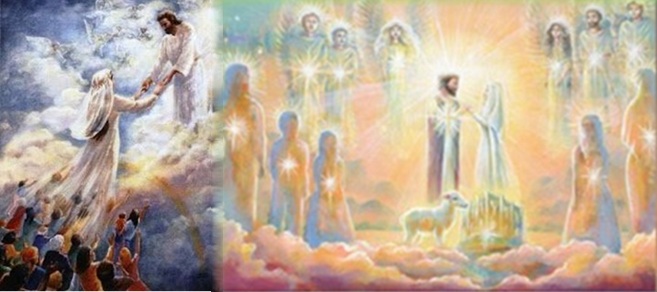
The biblical theme of the Bride of the Lamb is woven through Scripture from the teachings of Yeshua in the Gospels to the prophetic visions of the Book of Revelation. Although the Gospels rarely use the word bride directly, the presence of the Bridegroom, clearly identified as Yeshua the Messiah, implies the existence of a bride. The image draws on ancient Jewish marriage customs, portraying Messiah’s intimate covenant relationship with His redeemed people.
The first direct reference to the bride appears in John 3:29, where John the Baptist distinguishes himself from Yeshua by identifying Him as the Bridegroom. John calls himself the “friend of the bridegroom,” rejoicing greatly upon hearing the Bridegroom’s voice. While the bride is not explicitly named here, the passage establishes a foundational distinction: Yeshua is the Bridegroom, and He has a bride for whom He has come.
Yeshua Himself employs bridal imagery when questioned about fasting. In Mark 2:19, echoed in Matthew 9:15 and Luke 5:34, He explains that the friends of the bridegroom cannot fast while the bridegroom is present. A time will come, however, when the bridegroom is taken away, and then fasting will be appropriate. In these passages, Yeshua’s disciples are portrayed as the friends, guests, or companions of the bridegroom—distinct from the bride herself. These relationships reflect the joyous presence of the Messiah among His people during His earthly ministry, as well as His future departure and eventual return.
The theme continues in the Parable of the Ten Virgins (Matthew 25:1–13). Here, the kingdom of heaven is likened to ten virgins waiting with lamps to meet the bridegroom. The virgins represent those awaiting the coming of Messiah, emphasizing watchfulness, preparation, and readiness. Although the virgins are not the bride, the wedding setting reinforces the eschatological anticipation of Messiah’s return for His bride.
The clearest revelation of the bride comes in the Book of Revelation. In Revelation 21:2, John describes seeing the New Jerusalem descending from heaven, “prepared as a bride adorned for her husband.” Later, in Revelation 21:9–10, one of the seven angels explicitly invites John to behold “the bride, the Lamb’s wife,” and reveals the New Jerusalem—God’s holy city prepared for the redeemed. This imagery portrays the bride not simply as an individual or a single generation of believers but as the collective people of God, glorified and united with Yeshua for eternity. Revelation 3:12 earlier identifies those who “overcome” as having the name of God and the name of the New Jerusalem written upon them, identifying the overcomers with the bride.
In Revelation 22:17, the Spirit and the bride join together with one voice, saying “Come.” This final invitation reflects both the longing for Messiah’s return and the extension of God’s grace to all who are spiritually thirsty. Here, the bride participates in the redemptive mission of God, welcoming all who are willing to receive the water of life.
The Invited Guests at the Marriage Supper of the Lamb
A significant distinction emerges in Revelation 19:9, which states: “Blessed are they which are called unto the marriage supper of the Lamb.” Because those invited are guests, not the bride, they cannot be part of the bride itself. Yet they are blessed and present in heaven, demonstrating that they are indeed redeemed believers. Revelation 20:6 confirms that various groups of saints will share in heavenly blessings.
This distinction reveals that not all believers of all ages are part of the Bride of the Lamb. Scripture presents multiple groups of believers across history: apostles, prophets, and church-age believers—yet not all belong to the same category in God’s prophetic order.
The messages to the seven churches in Revelation further clarify this. In particular, the overcomers in the Church of Philadelphia are promised a unique reward: they will be pillars in the temple of God, will bear God’s name, and will be associated with the New Jerusalem (Revelation 3:12). This suggests a special class of faithful, overcoming church-age believers who will constitute the bride. The overcomers in other churches may also receive eternal rewards, but the text distinguishes Philadelphia’s faithful as uniquely connected to the New Jerusalem, the bride-city.
If the bride is a select group of faithful overcomers within the Church, then the invited guests must be other believers who are not part of that bridal company. These guests include:
- The apostles and disciples, who are repeatedly identified as the friends or companions of the bridegroom (Matthew 9:15; Mark 2:19; Luke 5:34).
- John the Baptist, who explicitly calls himself the “friend of the bridegroom” (John 3:29).
- Twenty four elders (Revelation 4:4, 10; Revelation 5:5,6,8,11,14; Revelation 7:11,13,16; Revelation 14:3; Revelation 19:4), angels of God (multiple references), Four Living Creatures (Ezekiel 1:4–28; Ezekiel 3:13; Ezekiel 10:1–22; Ezekiel 11:22; Isaiah 6:2–3; Revelation 4:6–8; Revelation 5:6,8,11,14; Revelation 6:1,3,5,7; Revelation 7:11; Revelation 14:3; Revelation 15:7) and the seven Spirits of God (Isaiah 11:2; Zechariah 3:9; Zechariah 4:10; Revelation 1:4; Revelation 3:1; Revelation 4:5; Revelation 5:6)
All these groups are redeemed, blessed, and present in heaven, yet they are distinct from the Bride of the Lamb. Their role as honored guests reflects their relationship to God across different dispensations and covenants.
 If any man serve me, let him follow me [John 12:26]