![If any man serve me, let him follow me [John 12:26]](https://onevisit.org/wp-content/uploads/2025/04/cropped-onevisit_final.jpg)
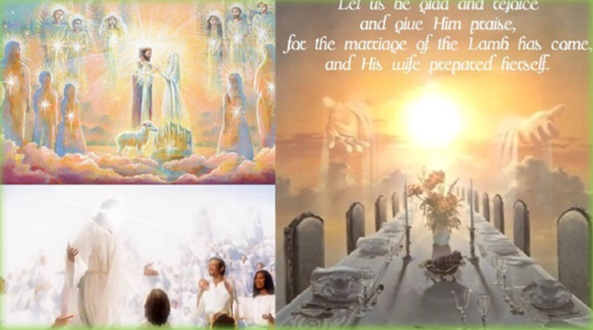
To understand the imagery of the marriage of the Lamb and the marriage supper of the Lamb in Revelation 19, it is necessary to examine the historical and cultural background of Jewish marriage customs during the time of Yeshua. These customs followed a three-step structure that strongly illuminates the prophetic symbolism used in Scripture. The terms “marriage” and “marriage supper” in Revelation specifically correspond to each stage of this ancient process.
1. The First Step: Betrothal (Kiddushin)
The first phase was the betrothal, in which a binding marriage covenant was established between the man and woman (Malachi 2:14; Matthew 1:18–19). This covenant was formalized by a written Ketubah, signed by the parents of both bride and groom. As part of this agreement, the groom’s family paid a dowry to the bride’s family, legally sealing the betrothal. Although the couple was considered husband and wife in covenantal terms, they did not yet live together or engage in marital relations. This period often lasted about a year and was marked by commitment, preparation, and waiting. In prophetic parallel, this first step reflects the covenant relationship between Messiah and His Church, established through His sacrificial death and the believer’s acceptance of Him.
2. The Second Step: Taking the Bride (Nissuin)
The second major step was the taking of the bride from her father’s house to the home of the groom’s father (Matthew 25:1–8). This dramatic moment—often occurring at night—was considered the essence of the marriage ceremony. A joyful procession traveled from the bride’s home to the groom’s father’s house, as illustrated in Yeshua’s parable of the ten virgins (Matthew 25:1–13). Central to this step was the bride “making herself ready,” symbolizing purity and anticipation. Upon arriving, the bride and groom would consummate the marriage. In biblical symbolism, this second step corresponds to the “marriage of the Lamb” in Revelation 19:7, when Messiah comes to take His Bride—the Church—into His Father’s house, completing the covenant and fulfilling the promise of John 14:2–3.
3. The Third Step: The Marriage Supper (Feast)
After consummation came the marriage supper, a joyful celebration lasting seven days (Genesis 29:21–28; Judges 14:10–12, 17). Guests who had previously been invited and assembled participated in feasting, music, and rejoicing. This festive period corresponds to the “marriage supper of the Lamb” in Revelation 19:9, a future celebration in which the redeemed rejoice in Messiah’s victory, union, and Kingdom.
The text emphasizes that many misunderstand this imagery because they interpret marriage through a modern human lens. However, God’s design for Messiah’s relationship with His Bride is rooted not in contemporary customs but in divinely instituted biblical patterns.
The name “the Lamb”—frequently used by John in Revelation—highlights Yeshua’s sacrificial identity. Though Isaiah compared the Messiah to a lamb, it was John the Baptist who first declared Him “the Lamb of God who takes away the sin of the world.” John the Apostle loved this title and used it extensively throughout Revelation, presenting the Lamb in glory, in judgment, and at last, in joyous celebration at His marriage supper.
Thus, the marriage and marriage supper of the Lamb reflect deep prophetic meaning, drawn directly from the ancient Jewish wedding pattern and centered on the redemptive work of Yeshua, the Lamb.
 If any man serve me, let him follow me [John 12:26]