![If any man serve me, let him follow me [John 12:26]](https://onevisit.org/wp-content/uploads/2025/04/cropped-onevisit_final.jpg)
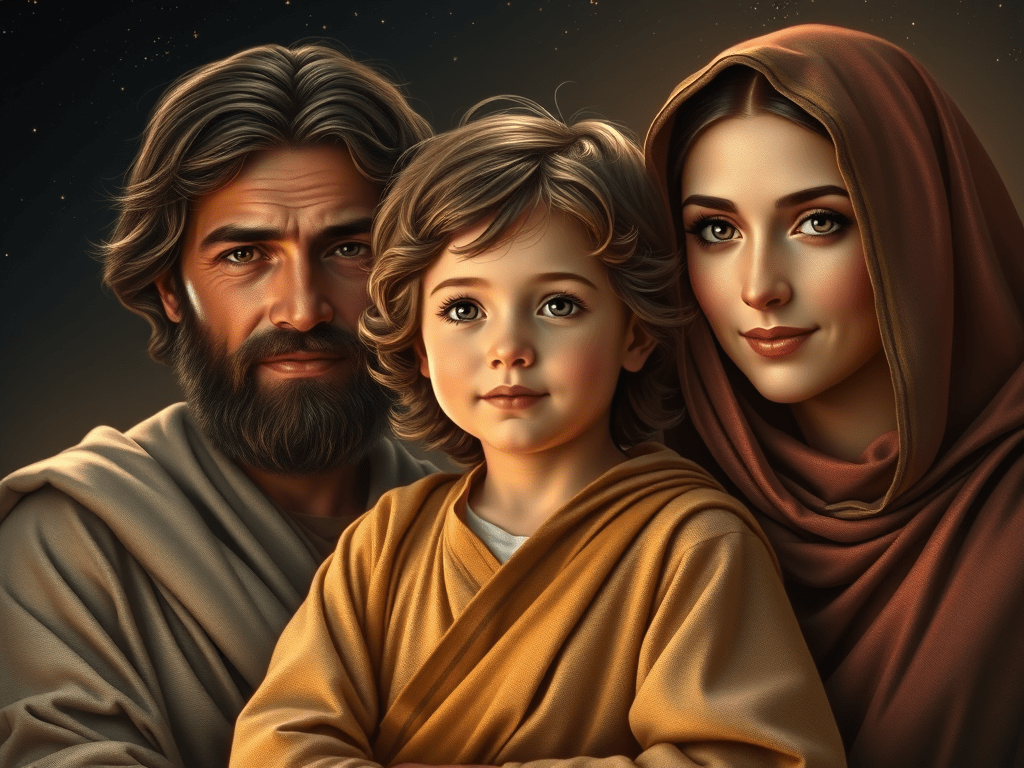
The Gospel of John opens with a profound declaration of Yeshua’s divine identity: “In the beginning was the Word, and the Word was with God, and the Word was God” (John 1:1). John affirms that the Word (Logos) was both distinct from and yet fully God—eternal, self-existent, and coequal with the Father. This same divine Word became human: “And the Word was made flesh and dwelt among us… full of grace and truth” (John 1:14). Thus, the eternal Son of God entered human history as Yeshua the Messiah (Jesus Christ), the Son of Man.
From the beginning, the apostles recognized that Yeshua was not a created being but the eternal Word who humbled Himself to become flesh. False teachings soon arose denying that Messiah truly came in the flesh, prompting John’s warning in 1 John 4:1–3 that those who deny the incarnation bear the spirit of antichrist. The apostles affirmed that the Word voluntarily laid aside His divine privileges, not His divine nature, to live as a mortal human being. As Paul explains in Philippians 2:5–8, Yeshua, though equal with God, “made Himself of no reputation,” took on human likeness, and “became obedient unto death—even death on a cross.”
The incarnation meant that the immortal God entered the limitations of human life. Conceived miraculously in Miryam (Mary) by the power of the Holy Spirit (Luke 1:30–35), Yeshua was holy, sinless, and uniquely the Son of God. He was not born of human seed, thereby untouched by Adam’s inherited sin. As the Word made flesh, He became both fully divine and fully human—able to experience suffering, temptation, and death. By age twelve, Yeshua already understood His divine mission, saying, “I must be about My Father’s business” (Luke 2:49).
Throughout His ministry, Yeshua testified repeatedly to His heavenly origin. John the Baptist proclaimed, “He that cometh after me is preferred before me, for He was before me” (John 1:15). Yeshua Himself declared, “I came down from heaven, not to do My own will, but the will of Him who sent Me” (John 6:38). In John 8:23, He contrasted His divine origin with humanity’s earthly nature: “I am from above… I am not of this world.” His climactic statement, “Before Abraham was, I AM” (John 8:58), directly identified Him with the eternal I AM who spoke to Moses at the burning bush (Exodus 3:14).
The incarnation fulfilled a divine purpose—to redeem humanity. As John the Baptist declared, “Behold the Lamb of God, who takes away the sin of the world” (John 1:29). Only by becoming human could the eternal Word die as a perfect sacrifice. Paul writes that Yeshua became “a little lower than the angels” (Hebrews 2:6–9), embracing mortality to restore mankind’s lost dominion and reconcile humanity to God. Though the Creator of angels, He humbled Himself to the lowest human form to accomplish salvation.
In His humanity, Yeshua also became the compassionate High Priest (Hebrews 4:14–16), fully understanding human weakness and interceding for believers with divine empathy. His sinless life provided both the model and means of holiness. As 1 John 2:5–6 teaches, those who claim to know Him must walk as He walked—in humility, obedience, and love.
The mystery of the incarnation reveals God’s astonishing grace. As Paul wrote, “God has chosen the foolish things of the world to confound the wise” (1 Corinthians 1:27). Through what appeared as weakness—the crucifixion of a man—God accomplished the greatest act of power and redemption. On the cross, Yeshua declared, “It is finished” (John 19:30). The Greek tetelestai means “paid in full,” signifying that His sacrificial death fully satisfied the debt of human sin. 1 Peter 1:18–19 confirms that believers are redeemed not by perishable things but “with the precious blood of Messiah, a lamb without blemish or spot.”
The psalmist foresaw this redemptive mystery, exclaiming, “What is man that You are mindful of him?” (Psalm 8:4–6). Though humanity seemed insignificant compared to the vast heavens, God crowned mankind with glory and honor by giving them dominion—and ultimately fulfilled this through Messiah, the true Son of Man. One day, when Yeshua reigns, all creation will be subject to His authority, restoring what was lost through Adam’s sin.
Yeshua’s words about John the Baptist—that “among those born of women none is greater” (Matthew 11:11)—further highlight the distinction between earthly and heavenly glory. Even the greatest on earth remains lower than the least in the Kingdom of Heaven, for the redeemed there share in God’s holiness and immortality. Yeshua, born not of human descent but by divine conception, identified Himself as the least in the Kingdom—humbling Himself to the lowest place to raise humanity to the highest.
In summary, the Gospel message declares that the eternal Word of God became flesh to reveal God’s nature, redeem humanity, and restore creation. The incarnation bridges eternity and time, divinity and humanity. The Word—coequal with the Father, full of grace and truth—emptied Himself to live among us, die for our sins, and rise again in victory. His coming affirms God’s plan of love and reconciliation: that through Yeshua the Messiah, mortals may receive immortality and sinners may be called sons and daughters of God.
Thus, the Word who was with God and was God entered human history, dwelt among us, and offered Himself as the perfect sacrifice. Through His blood, believers are redeemed, restored, and invited into eternal fellowship with the living God. The mystery of the incarnation—God made flesh—is the foundation of all Christian faith: Emmanuel, “God with us,” who became man so that mankind might dwell with God forever.
 If any man serve me, let him follow me [John 12:26]