![If any man serve me, let him follow me [John 12:26]](https://onevisit.org/wp-content/uploads/2025/04/cropped-onevisit_final.jpg)
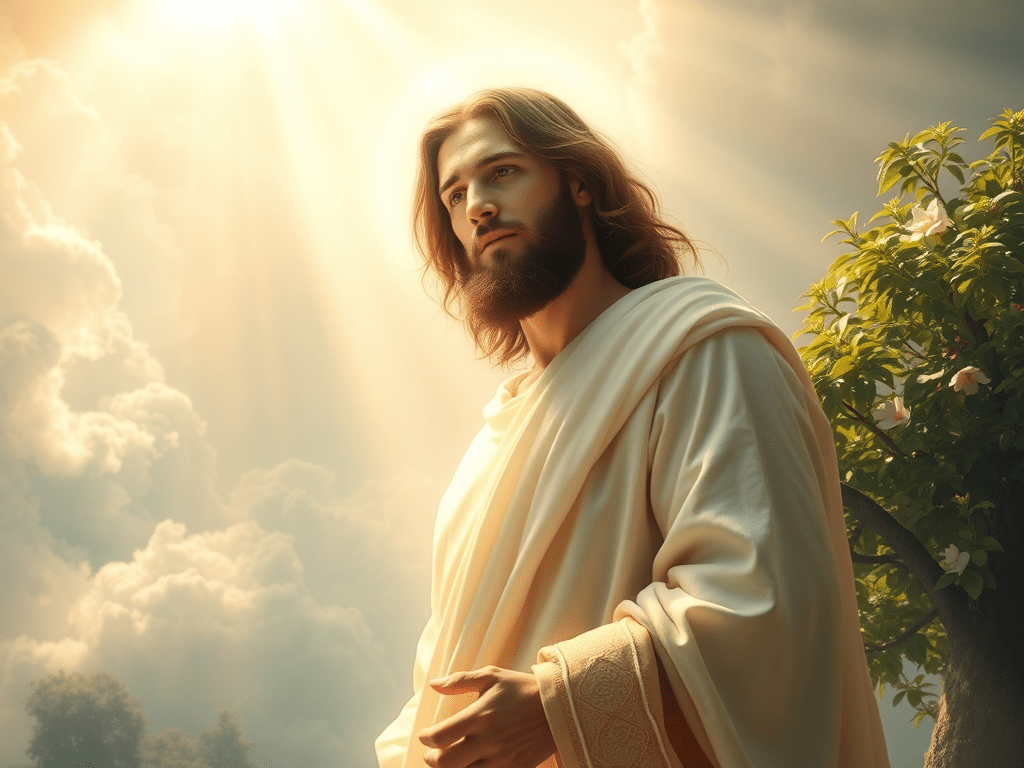
The scripture reveals the voluntary nature of Yeshua’s (Jesus’) sacrifice—His choice to leave the perfection of heaven, take on human form, and offer Himself as the atonement for humanity’s sins. It highlights that the essence of Yeshua’s mission was not one of compulsion, but of divine volunteerism motivated by love. Though fully God, He chose to become a servant, demonstrating the ultimate model of humility and obedience. His willingness to lay down His life and take it up again not only secured redemption for mankind but also exemplified the true spirit of self-sacrifice that believers are called to emulate.
From the foundation of creation, humanity was given the freedom to choose. Adam’s choice in the Garden of Eden—to disobey God—brought sin, suffering, and death into the world. This act subjected all humanity to the consequences of separation from God. However, in divine compassion, God provided a way for reconciliation. Yeshua volunteered to step into history as the Messiah, interceding for fallen humanity and reversing the curse brought by Adam’s disobedience. Scriptures such as 1 Corinthians 15:22 (“For as in Adam all die, even so in Christ shall all be made alive”) affirm that through Yeshua’s obedience, the pathway to eternal life was restored.
Importantly, the passage underscores that God operates on the principle of choice. He does not force His will upon creation. Just as mankind has the freedom to choose or reject Him, Yeshua was not coerced into redeeming the world. His sacrifice was an act of willing love, reflecting the perfect unity within the triune Godhead—Father, Son, and Holy Spirit. Though Yeshua and the Father are one, Yeshua’s decision to take on the form of humanity (Philippians 2:5–10) illustrates the depth of divine humility. He “made Himself of no reputation,” became obedient to death, and was therefore exalted by God, given “a name which is above every name.”
This voluntary submission reveals both divine character and divine purpose. According to 2 Peter 3:9, God “is not willing that any should perish,” and this same desire is reflected in Yeshua’s mission. As Hebrews 1:3 notes, Yeshua is “the radiance of God’s glory and the exact representation of His being.” Every attribute and intention of God is mirrored perfectly in Yeshua, meaning that His choice to die for mankind was entirely consistent with the Father’s heart of love.
Therefore, it is reminded to believers that, although salvation has been completed through Yeshua’s death and resurrection, God still extends to every individual the freedom to accept or reject this gift. John 1:12–13 affirms that all who receive Him become children of God, not by human effort but by divine birth. Thus, Yeshua’s voluntary sacrifice not only redeems but also calls His followers to live likewise—freely offering themselves in service and love. His choice to die and rise again remains the ultimate expression of divine volunteerism, a model of obedience, humility, and grace that brings glory to God and life to all who believe.
 If any man serve me, let him follow me [John 12:26]