![If any man serve me, let him follow me [John 12:26]](https://onevisit.org/wp-content/uploads/2025/04/cropped-onevisit_final.jpg)
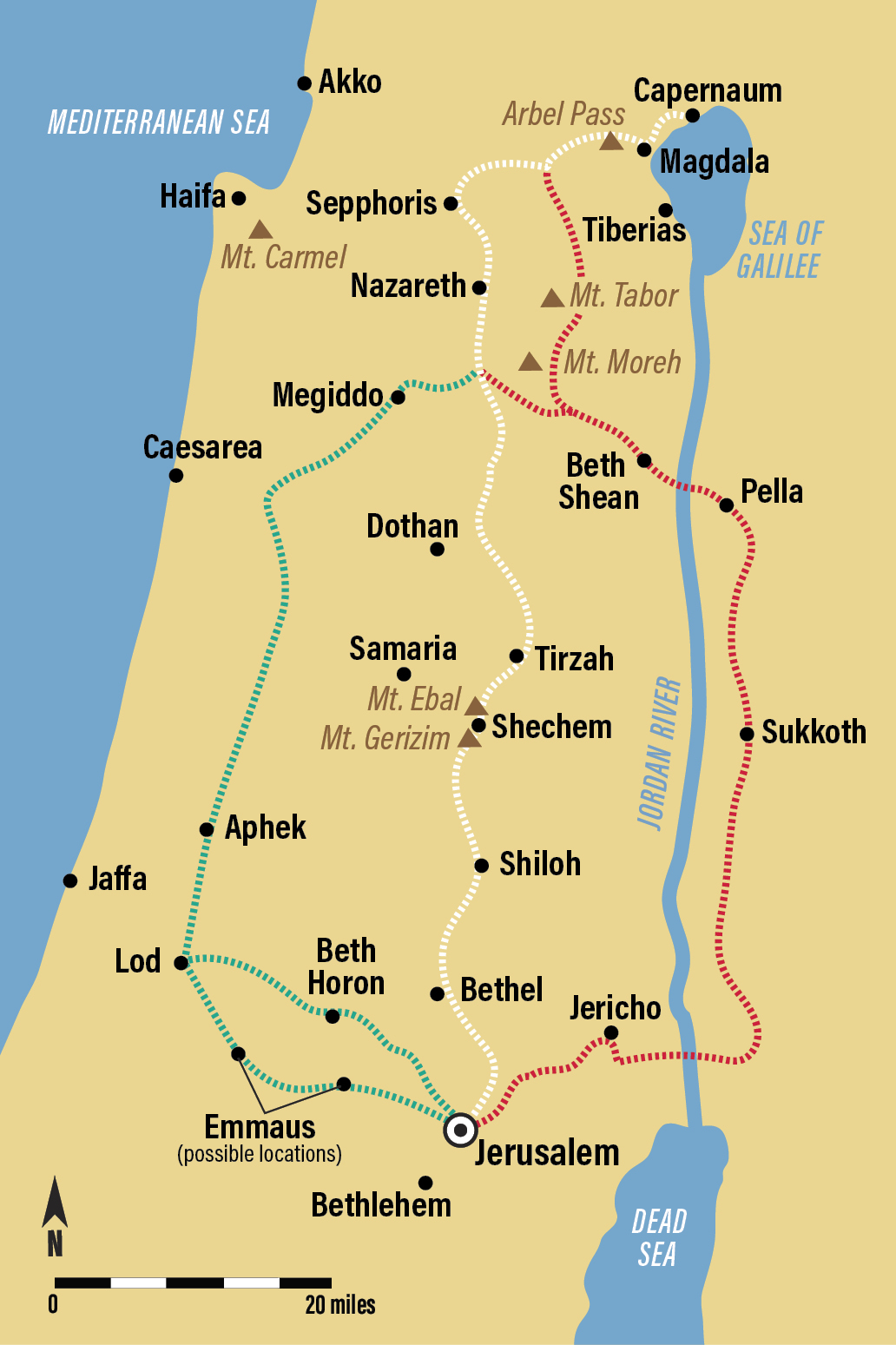
The ministry of Yeshua (Jesus) in the Bible is marked by a wide-ranging scope of healing and miraculous acts that He performed in various regions throughout Israel. These acts were not only displays of divine power but were also symbolic of the expansion of God’s Kingdom, reaching different areas and diverse groups of people. His healings and miracles were often region-specific, and the context of each region—whether rural or urban, Jewish or Gentile—revealed deeper truths about His mission and purpose. The “region-wise” approach to His miracles offers valuable insight into the geographic and cultural spread of His ministry.
1. Galilee Region: A Region of Revelation and Restoration
Galilee, particularly the area around the Sea of Galilee, was the heart of Yeshua’s early ministry. This rural and largely Jewish region saw numerous miracles, highlighting the accessibility of Yeshua’s power to the marginalized and the suffering. In Matthew 4:24, we read, “News about Him spread all over Syria, and people brought to Him all who were ill with various diseases, those suffering severe pain, the demon-possessed, those having seizures, and the paralyzed; and He healed them.”
Yeshua’s miracles in Galilee were often tied to the restoration of health and dignity for those in society’s margins. The healing of a centurion’s servant (Matthew 8:5-13) and the raising of the widow’s son at Nain (Luke 7:11-17) are notable examples. The miracles in Galilee were performed not just to demonstrate His authority but to show that the Kingdom of God was available to all, including Gentiles and outcasts. His works here underscored His role as a healer of both physical and spiritual ailments, setting the stage for a broader ministry.
2. Judea Region: A Region of Jewish Faith and Conflict
In Judea, the region surrounding Jerusalem, Yeshua’s miracles often took on a more controversial tone. This was the religious and cultural center of Israel, where many Jewish religious leaders and scribes held authority. His miracles here were intended to challenge traditional religious views and provoke a deeper understanding of God’s will. One of the most significant miracles in Judea was the raising of Lazarus from the dead in John 11:1-44. This powerful act not only demonstrated Yeshua’s mastery over death but also symbolized the spiritual resurrection He came to bring to all believers.
Another important aspect of His ministry in Judea was His cleansing of the Temple (Matthew 21:12-13), which was a radical challenge to the temple’s commercialization and corruption. Yeshua’s miracles in this region emphasized the tension between His divine mission and the religious establishment. He sought to reveal that the Kingdom of God was not about external rituals but about inner transformation.
3. Samaria Region: A Region of Reconciliation and Evangelism
Samaria, located between Galilee and Judea, was a region marked by historical tension between Jews and Samaritans, who were seen as religiously and ethnically impure by many Jews. However, Yeshua’s ministry in Samaria revealed His mission to break down these barriers. In John 4:1-42, Yeshua’s encounter with the Samaritan woman at the well is a profound example. He not only healed her spiritually by revealing Himself as the Messiah, but He also reached out to an entire village, demonstrating that salvation was available to all, even those considered outsiders by the Jewish community.
Another miracle in this region, though less recorded, is the healing of the ten lepers in Luke 17:11-19. One of them, a Samaritan, returned to thank Yeshua, which emphasized that even those from traditionally marginalized groups could experience God’s healing and grace.
4. Decapolis and Gentile Regions: A Broader Outreach to Non-Jews
The Decapolis, a region of ten cities on the eastern side of the Jordan River, was predominantly Gentile. Yeshua’s miracles in these regions were signs that His mission extended beyond the Jewish people to include Gentiles. In Mark 7:31-37, Yeshua healed a deaf and mute man in the region of the Decapolis. This miracle, performed among non-Jews, demonstrated that the healing power of God was available to all people, regardless of their ethnic or religious background.
Additionally, in Matthew 15:29-31, Yeshua healed many people in Gentile areas, showing that His miracles were not limited to the Jewish population but were meant for the healing of the nations. His work in these regions symbolized the broader scope of God’s Kingdom, which transcended ethnic and cultural boundaries.
5. The Wilderness and Transfiguration: A Sacred Encounter
Though not a region of constant ministry, the wilderness played a pivotal role in Yeshua’s life, especially in His temptation in the desert (Matthew 4:1-11) and the Transfiguration (Matthew 17:1-9). These events highlighted moments of personal spiritual preparation and divine affirmation of His mission. The Transfiguration, in particular, was a miraculous event that occurred on a mountain in the wilderness, where Yeshua revealed His divine glory to three of His disciples—Peter, James, and John—symbolizing the fullness of the Kingdom of God.
Conclusion
Yeshua’s healing and miracles were not confined to any single region but were spread across various territories, each with its own cultural and spiritual significance. His ministry began in Galilee, expanded into Judea, reached out to the Samaritans and Gentiles, and touched all people with the message of God’s love, healing, and Kingdom. Each region in which He performed miracles added a layer to His mission—revealing the breadth of God’s salvation plan for all humanity. If we summaries the healing and miracles of Yeshua, He performed majoring of the healings and miracles in and around the region of Galilee (about 64%), then in and around Jerusalem, Judea, Samaria region (about 25%), and in and around Decapolis, Phoenicia & other regions (about 11%).
 If any man serve me, let him follow me [John 12:26]