![If any man serve me, let him follow me [John 12:26]](https://onevisit.org/wp-content/uploads/2025/04/cropped-onevisit_final.jpg)
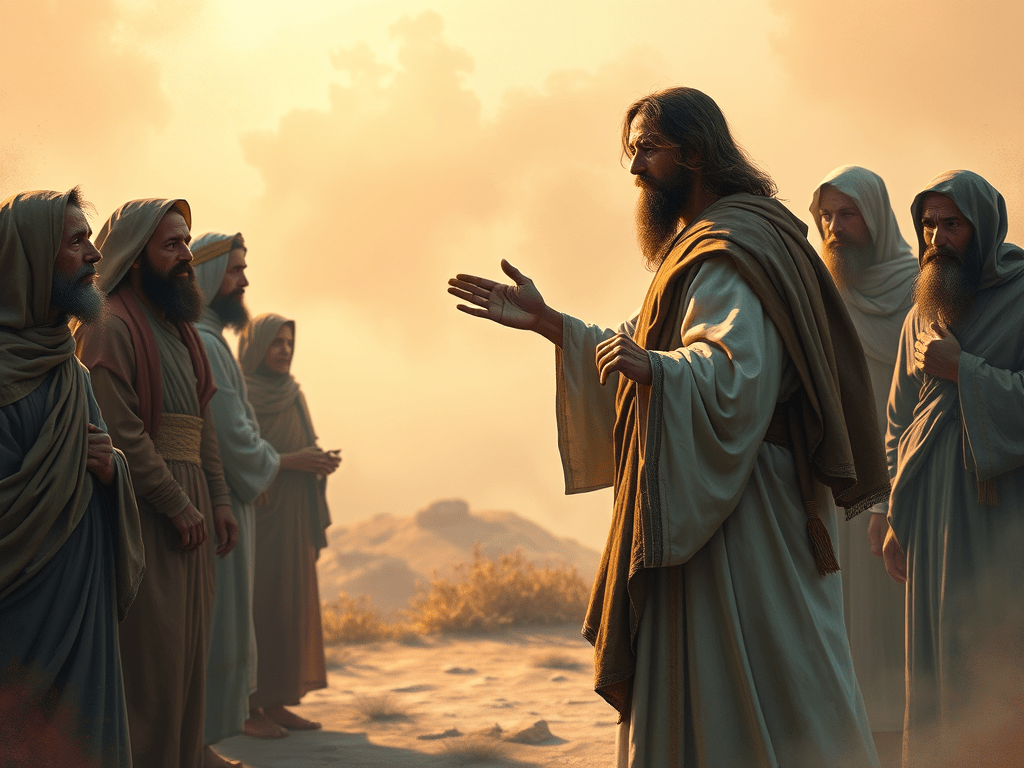
The account of the ten lepers healed by Yeshua is found only in Luke’s Gospel. It occurs as Yeshua continues His journey to Jerusalem (Luke 9:51–19:27), where His teaching often focuses on the themes of discipleship, the Kingdom of God, and the inclusion of outsiders.
Luke sets the scene in the border region between Samaria and Galilee (Luke 17:11). This is significant because Jews and Samaritans had long-standing hostility, rooted in ethnic, religious, and historical tensions (cf. John 4:9). For a Jewish rabbi to minister in this region highlights the inclusive nature of Yeshua’s mission.
Leprosy in the biblical context was not just a medical issue but also a social and religious one. Lepers were declared unclean under the Law (Leviticus 13–14), excluded from community life, and forced to live in isolation. They were required to keep their distance and cry out “Unclean!” when approaching others. To be healed meant not only physical restoration but also reintegration into society and fellowship with God’s people.
As Yeshua entered a certain village, ten lepers stood at a distance and called out loudly: “Yeshua, Master, have mercy on us!” (Luke 17:13). Their cry reveals both their desperation and their recognition of His authority. Instead of laying hands on them or speaking a direct healing word, Yeshua instructed them: “Go, show yourselves to the priests” (v. 14). This command aligns with the Law of Moses (Leviticus 14), which required priestly inspection to confirm cleansing before a leper could rejoin society.
The ten obeyed, and as they went, they were cleansed (v. 14). This emphasizes that healing came through both Yeshua’s authority and their obedient faith.
However, the story turns when one of them, realizing he was healed, returned to Yeshua, glorifying God in a loud voice. He fell at Yeshua’s feet, giving thanks—and Luke highlights, “he was a Samaritan” (v. 16). The gratitude and worship of the outsider stand in stark contrast to the silence of the nine.
Yeshua then asked: “Were not ten cleansed? Where are the nine? Was no one found to return and give praise to God except this foreigner?” (vv. 17–18). To the Samaritan, He said: “Rise and go your way; your faith has made you well” (v. 19). The word “well” (Greek: sozo) can mean not only physical healing but also spiritual salvation.
This passage communicates several powerful lessons:
- Faith and Obedience – The lepers’ healing came as they obeyed Yeshua’s command. True faith is shown in action, even before the result is visible.
- Gratitude and Worship – While all ten were healed physically, only one received the deeper blessing of spiritual restoration because he returned with gratitude. Thanksgiving opens the way to a fuller experience of God’s grace.
- Inclusion of Outsiders – The fact that the thankful leper was a Samaritan underscores Luke’s theme of God’s mercy extending beyond Israel to those considered outsiders. The rejected one became the true worshiper.
- Salvation Beyond Healing – The nine received physical cleansing, but only the Samaritan received the affirmation of being made whole in the fullest sense. Gratitude and faith bring not only healing but also salvation.
In summary, Luke 17:11–19 reveals Yeshua as the compassionate Savior who responds to cries for mercy, heals the broken, and offers salvation to those who respond with faith and thanksgiving. It challenges believers to not only seek His blessings but also to return with grateful hearts, glorifying God for His mercy.
 If any man serve me, let him follow me [John 12:26]