![If any man serve me, let him follow me [John 12:26]](https://onevisit.org/wp-content/uploads/2025/04/cropped-onevisit_final.jpg)
Luke 14:1–6 takes place during Yeshua’s journey toward Jerusalem, a section of Luke’s Gospel (chapters 9–19) that focuses on His teaching about discipleship, the Kingdom of God, and His growing conflict with the religious leaders.
In this passage, Yeshua is invited to eat at the house of a prominent Pharisee on the Sabbath. Meals in the ancient Jewish world were not only social gatherings but also important occasions for teaching, status, and debate. For Pharisees, strict observance of the Sabbath was central to their understanding of holiness. They often criticized Yeshua because He healed on the Sabbath, seeing it as a violation of their interpretation of the Law.
The background also includes earlier Sabbath controversies in Luke’s Gospel. For example, in Luke 6:6–11, Yeshua healed a man with a withered hand in a synagogue on the Sabbath, leading the Pharisees to rage against Him. Again in Luke 13:10–17, He healed a woman bent over for eighteen years, challenging their hypocrisy about what is truly lawful on the Sabbath. Luke 14:1–6 is another confrontation along these same lines, further revealing Yeshua’s authority and the heart of God’s law.
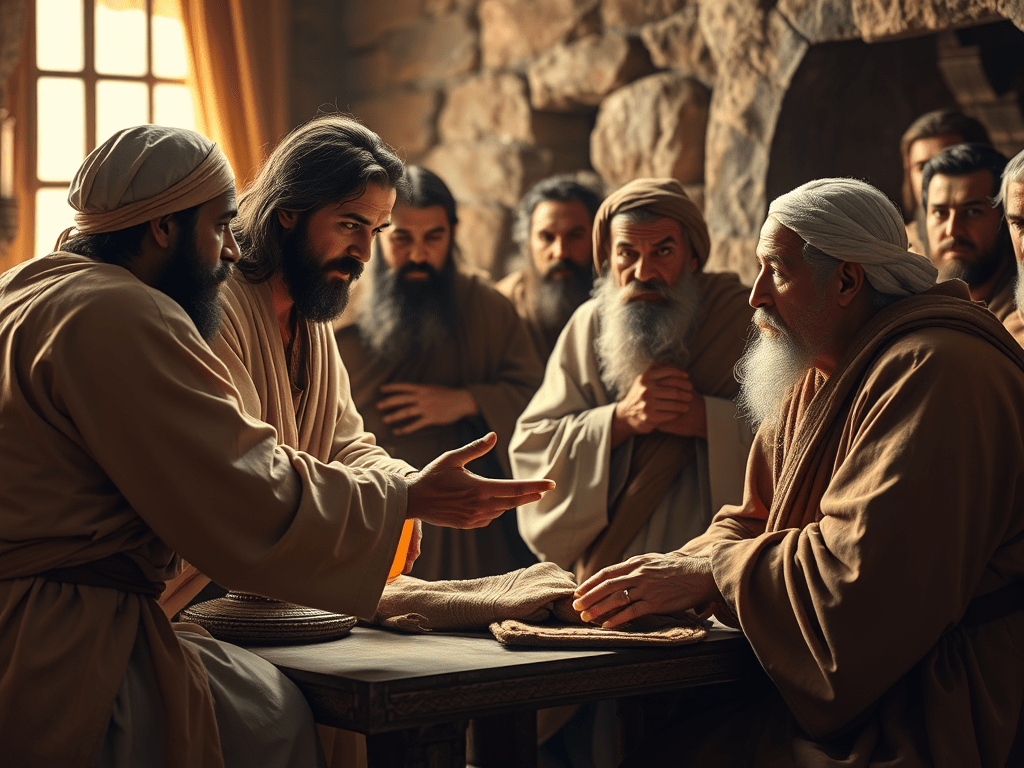
As Luke describes, on one Sabbath day Yeshua went to eat at the house of a leader of the Pharisees, and “they were watching Him closely” (Luke 14:1). Their watchfulness suggests they were looking for an opportunity to accuse Him of breaking the Sabbath.
In front of Yeshua was a man suffering from dropsy, a condition involving swelling of the body due to fluid retention—likely a chronic and visible illness. The presence of this man at the meal could have been a deliberate setup by the Pharisees, testing whether Yeshua would heal on the Sabbath.
Before acting, Yeshua posed a direct question to the lawyers and Pharisees: “Is it lawful to heal on the Sabbath, or not?” (Luke 14:3). They remained silent, unwilling to either affirm His authority or accuse themselves of hardness of heart.
Yeshua then took hold of the man, healed him completely, and sent him away (v. 4). Afterward, He addressed His critics with another question: “Which of you, having a son or an ox that has fallen into a well on a Sabbath day, will not immediately pull him out?” (v. 5). The comparison exposed their inconsistency—if they would rescue an animal or child on the Sabbath, why object to restoring a suffering human being? Again, His opponents were silenced (v. 6).
This short but powerful passage teaches several lessons:
- Authority of Yeshua – By healing on the Sabbath, Yeshua demonstrates His authority to interpret God’s law correctly. He reveals the Sabbath’s true purpose: a day for rest, restoration, and mercy, not rigid legalism.
- Compassion Above Legalism – Yeshua shows that human need takes precedence over ritual observance. Compassion is at the heart of God’s commands, and love fulfills the Law (cf. Romans 13:10).
- Exposure of Hypocrisy – The Pharisees valued their own rules more than the well-being of people. By highlighting their willingness to help animals but objecting to human healing, Yeshua revealed their distorted priorities.
- Kingdom Principle – The Kingdom of God is marked by healing, mercy, and wholeness. The Sabbath controversy points to the deeper rest and restoration that Yeshua brings to all who come to Him.
In conclusion, Luke 14:1–6 is not simply about Sabbath observance but about the heart of God’s law. Yeshua reveals that God’s intention is life, mercy, and restoration. The silence of the Pharisees contrasts with the compassion of Messiah, showing that true obedience to God is expressed in love and mercy.
 If any man serve me, let him follow me [John 12:26]