![If any man serve me, let him follow me [John 12:26]](https://onevisit.org/wp-content/uploads/2025/04/cropped-onevisit_final.jpg)
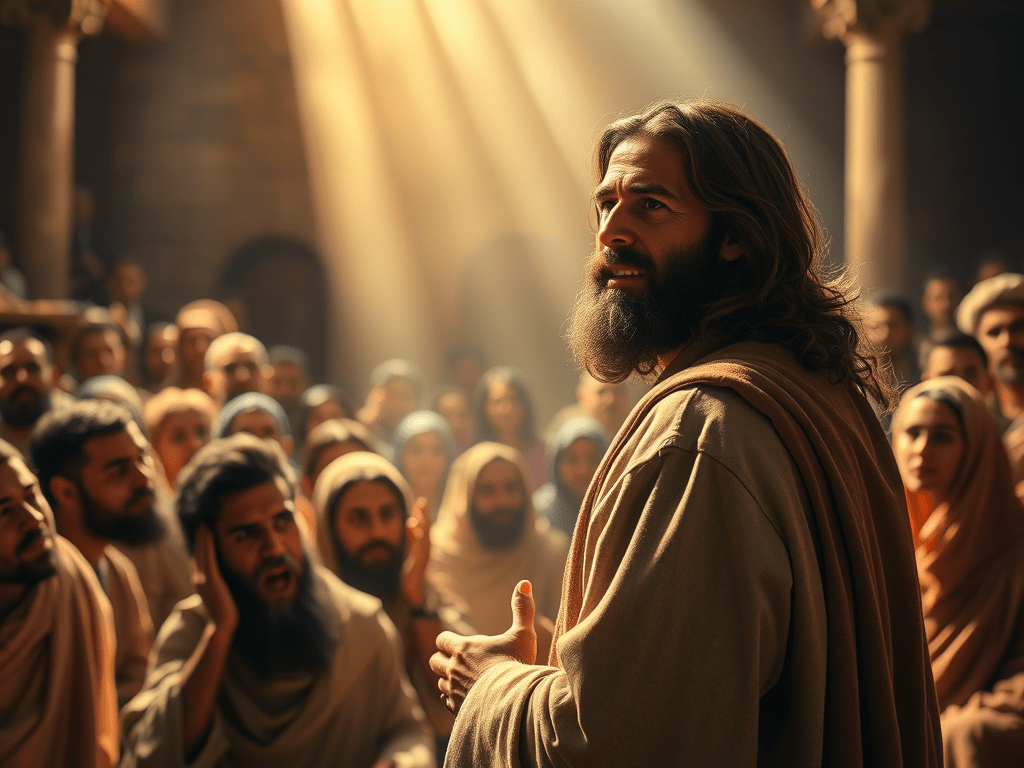
The passages in Mark 1:21-28 and Luke 4:31-37 describe one of the early public acts of Yeshua’s (Jesus’s) ministry after His baptism (Mark 1:9-11; Luke 3:21-22) and wilderness temptation (Mark 1:12-13; Luke 4:1-13). Both Gospel writers record how Yeshua entered Capernaum, a significant town in Galilee, which later became the center of His ministry (Matthew 4:13). On the Sabbath day, He went into the synagogue to teach. His teaching was unlike the scribes, for He spoke with divine authority. This context sets the stage for the revelation of His identity and power, not only in teaching but also in authority over demonic forces.
In the synagogue at Capernaum, Yeshua began to teach, and those present were “astonished at His doctrine: for He taught them as one that had authority, and not as the scribes” (Mark 1:22; Luke 4:32). His authority was not derived from quoting traditions or rabbis but came directly from the power of God.
During this teaching, a man possessed by “a spirit of an unclean devil” (Luke 4:33; Mark 1:23) suddenly cried out. The spirit recognized Yeshua and exclaimed: “Let us alone; what have we to do with thee, thou Yeshua of Nazareth? art thou come to destroy us? I know thee who thou art; the Holy One of God” (Mark 1:24; Luke 4:34). This shows the spiritual realm’s awareness of Yeshua’s divine identity and authority, even when many people did not yet recognize Him.
Yeshua rebuked the unclean spirit, saying, “Hold thy peace, and come out of him” (Mark 1:25; Luke 4:35). The demon convulsed the man and came out without harming him. The people were amazed, declaring, “What a word is this! for with authority and power He commandeth the unclean spirits, and they come out” (Luke 4:36; cf. Mark 1:27).
This event marked a turning point. The news of Yeshua’s power and authority spread rapidly throughout Galilee (Mark 1:28; Luke 4:37).
These passages highlight several key truths:
- The Authority of Yeshua’s Teaching – Unlike the scribes who relied on traditions, Yeshua spoke with direct authority, revealing the kingdom of God (Mark 1:22; Luke 4:32). His words carried divine weight, fulfilling Deuteronomy 18:18, where God promised to raise up a Prophet who would speak His words.
- The Authority of Yeshua over Demons – This is the first recorded exorcism in both Gospels. The unclean spirit recognized Yeshua as the “Holy One of God” (Mark 1:24; Luke 4:34). His rebuke demonstrates that His authority is not only in doctrine but also in action—He commands spiritual powers and they obey.
- The Revelation of His Identity – While people were still trying to understand who Yeshua was, demons immediately recognized His divine nature and destiny to “destroy the works of the devil” (1 John 3:8).
- The Spread of His Fame – The miracle amazed the crowd, leading to the spread of His reputation across Galilee (Mark 1:28; Luke 4:37). This underscores how His ministry quickly gained attention because it combined both word and deed.
In conclusion, Mark 1:21-28 and Luke 4:31-37 affirm that Yeshua’s ministry is characterized by authority in teaching and power over evil, proving Him to be the Messiah sent by God.
 If any man serve me, let him follow me [John 12:26]